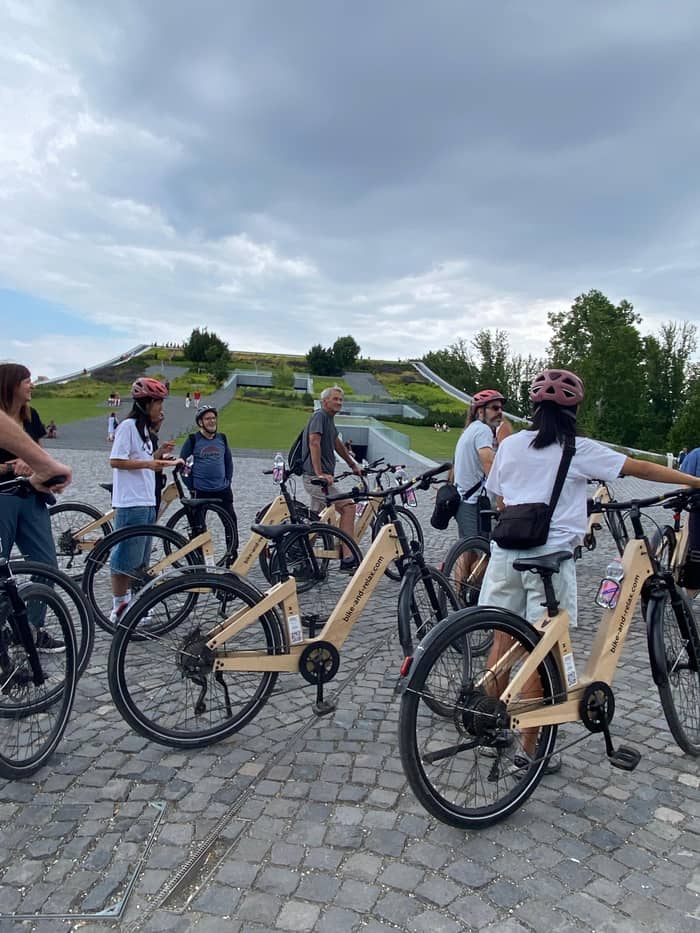
Cross square on
Tram tracks
Grooves that grab tires
- RiskNarrow tires
- FixCross at an angle
- Worst whenWet
Guides
Language
Currency
See availabilityfrom €56 · no cancel feeClickable checklist
Short answer
Cycling in Budapest needs front and rear lights and spoke reflectors; helmets are only compulsory for fast riding outside towns, and the real hazards are tram rails, busy bridges and crowded streets.
The rules
Things to do · 11 items
Mark items as done. Your progress is saved on this device only.
0 / 11 ready
All set. All that is left is the date and how many riders are coming.
Secure your spotCycling in Budapest is easier every year, with new lanes and car-free streets, but tram rails, busy bridges and cobbles still catch visitors out. Here is what the rules require and how to ride the city well.
Editorial team, budapestebiketour.click · Updated November 8, 2026 · 8 mins to read
Summary view
Cycling in Budapest has changed fast. The public bike share relaunched with electric bikes in August 2026, BKK keeps moving bike lanes off the pavement and onto the road, and parts of the old Jewish Quarter now close to cars.6,7,4 The city center is compact and mostly flat on the Pest side, which makes the bike a quick way to cover ground between the sights. The hills, the cobbles of the castle district and the tram network are where you need your wits about you.
Hungary's road rules apply to you from the moment you ride off, whether the bike is your own, a rental or a share bike. The European Union's travel portal summarizes what a cyclist must carry and where helmets and vests are required, and its rules for Hungary are the basis of the checklist above.1 Rules can change, so check the current situation if you are reading this long after your trip was planned.
If you are nervous about traffic, ride your first hour with a guide. A guided city ride on the bike lanes takes 2.5 hours and shows you the junctions, crossings and quiet back streets that a map does not. After that, a Budapest bike ride on your own feels far more relaxed, and you know which routes to repeat and which to avoid. Ask the guide about the lanes near your hotel; local advice beats any map.
The rules in one place
| Item | In town | Outside towns |
|---|---|---|
| Front and rear lights | Required | Required1 |
| Orange spoke reflectors | Required | Required1 |
| Helmet | Not required | Over 50 km/h2 |
| Reflective vest | Not required | At night10 |
| Bus lane | Where signed | Where signed3 |
From the European Union's summary of Hungarian road rules; check the current Hungarian highway code before a long ride.1,2,10,3
The equipment rules are short. A bike needs front and rear lights and orange spoke reflectors.1 A helmet is compulsory only when riding faster than 50 km/h outside built-up areas, which in practice means it is a personal choice in the city.2 A reflective vest is required outside built-up areas at night or in poor visibility.10 If you plan a ride out along the river to Szentendre, pack one for the way back.
Tour operators set their own rules on top of the law. On the downtown e-bike tour helmets are available but not obligatory, while one private e-bike tour makes them compulsory. Rental shops usually hand over a helmet if you ask, and a self-guided package to Szentendre includes one along with a repair kit and pump. Wearing one costs you nothing and protects you on the cobbles and tram rails where falls happen.
Check the lights before you take any bike out. Many rental lights clip on and off, and it is easy to ride away in the afternoon and find yourself in the dark in the early evening in autumn. A small front light in your pocket is the cheapest insurance you can carry. Reflective strips on a bag or jacket help too, especially on the wide, fast roads along the river.
Month by month
The chart plots hours with no sun (mid-month) and days that get at least 2.5 mm of precipitation. Data: NOAA, station Budapest, 1991 to 2020.17
Budapest's bike network is a patchwork of painted lanes, separate paths and shared streets, and the quality changes from one district to the next. Cyclists may use a bus lane where the signs indicate it, which can be the fastest and calmest line along a busy road.3 Where there is no sign, stay out: buses, taxis and emergency vehicles use those lanes at speed, and a driver will not expect you there.
The Grand Boulevard, the ring road around the inner city, is the stretch BKK itself names as a problem: conflicts between pedestrians and cyclists are a regular occurrence there.11 On József körút the bike lane is moving off the pavement and onto the carriageway, and on Baross utca two-way protected lanes are being built to connect to the main routes.7,16 The full renovation of the boulevard, with protected lanes, is planned for 2029.12
Lanes often end without warning at a junction or a bus stop. When that happens, slow down, look over your shoulder and merge with traffic deliberately rather than squeezing along the kerb. On shared pavements pedestrians have the space first; ring your bell early and pass slowly. Plan the route on a cycling map before you set off and you can link the lanes and quiet streets into a calm ride.
Ride alone or with a guide
Your confidence in traffic decides more than the map does.
If I rarely ride in city traffic
Start with a guided ride
A guided city ride on the bike lanes takes 2.5 hours.
If I want to ride up to the castle
An e-bike
E-bikes ease hilly terrain.8
If I only need short hops
A share bike
If I will be out after dark
Plan a lit route
Lights are required on every bike.1
If I am riding out of town
Pack a vest
Required outside towns at night.10
Three tricky spots
Cross square on
Grooves that grab tires
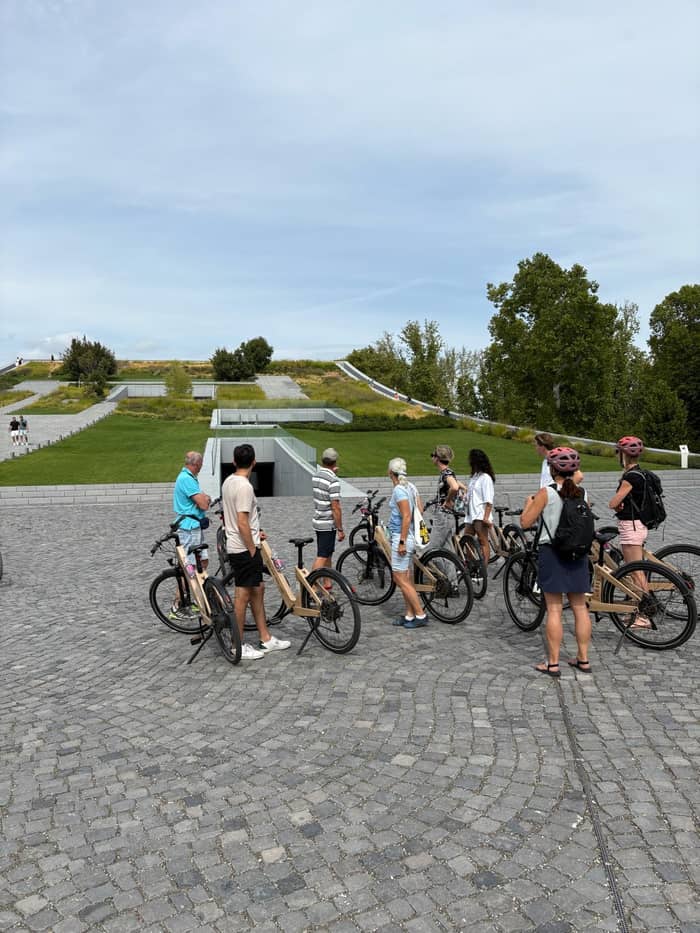
Changing lanes
The busy inner ring
Ride with a guide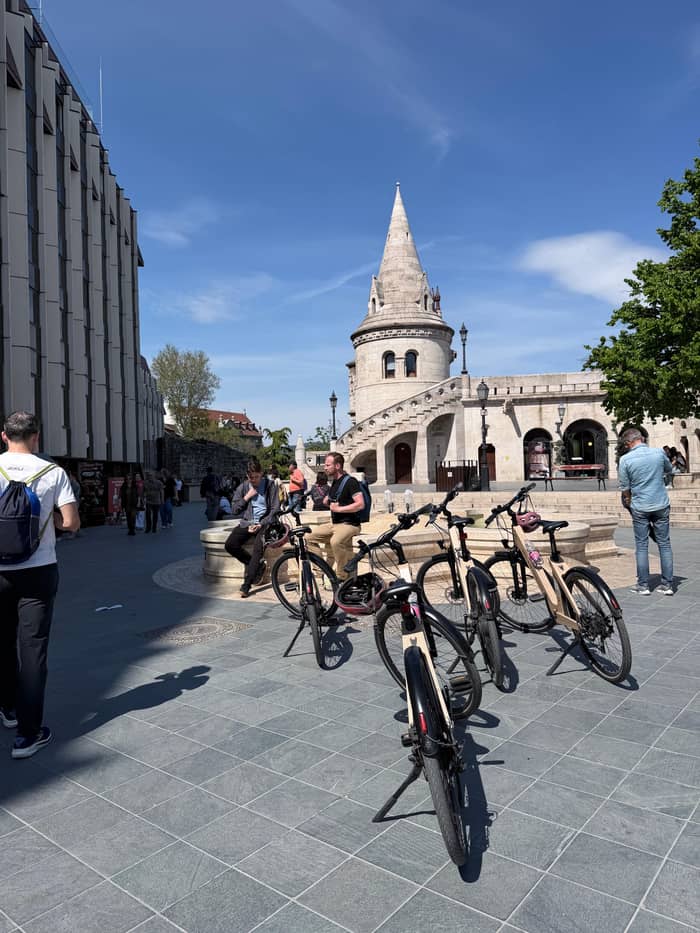
Walk at night
Car-free, crowded
Ride with a guideTram tracks are the classic trap. A narrow tire drops into the groove and the bike stops while you carry on. Cross rails at as close to a right angle as you can, never ride along them, and take extra care when they are wet or covered in leaves. Trams also cannot swerve, so never ride between a tram and the kerb at a stop where people are getting on and off.
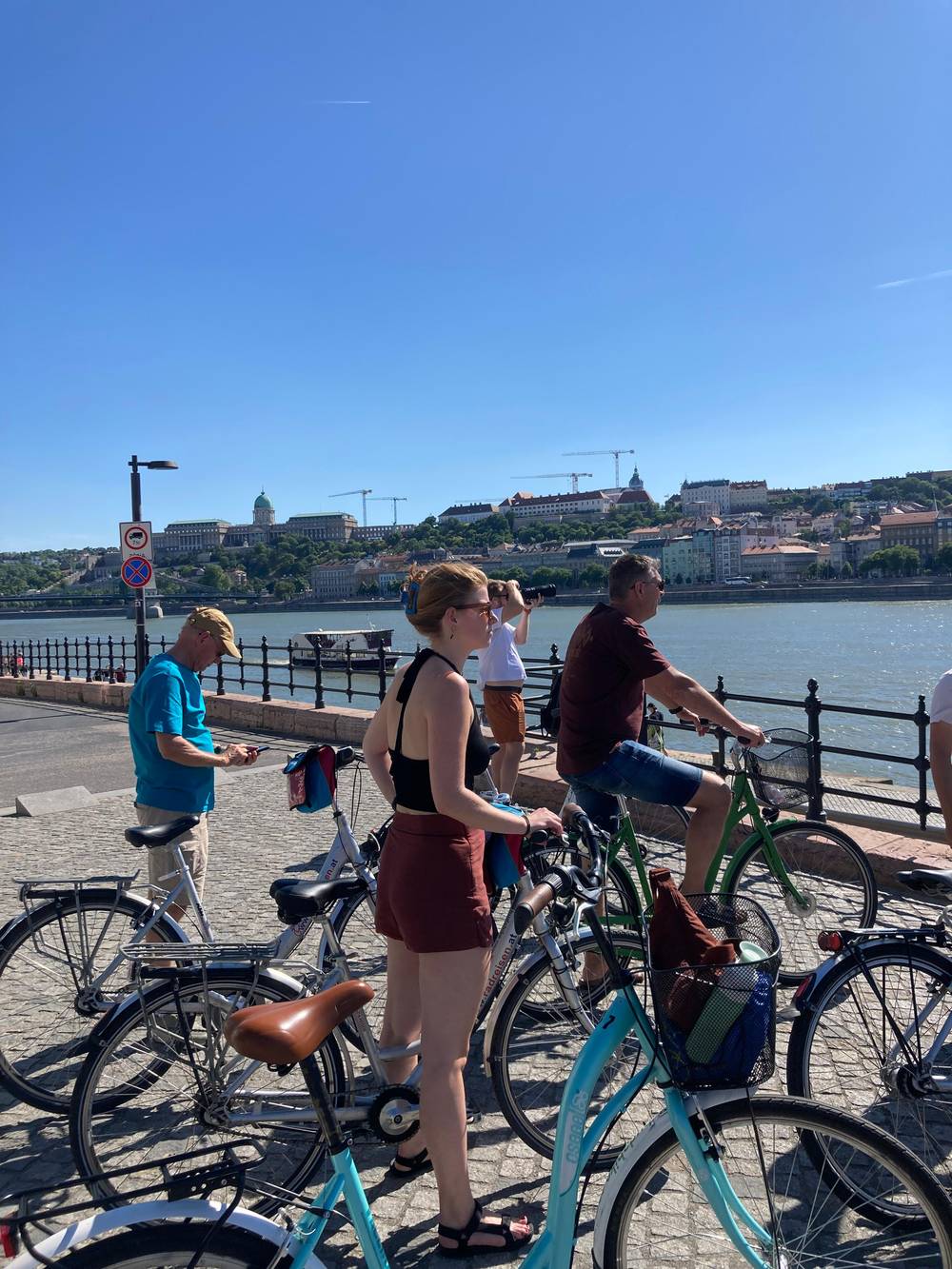
Bridges concentrate traffic, wind and photographers. On the Margaret Bridge, BKK kept a route open for walkers and cyclists to Margaret Island during the 2024 works on its cycle path; only motor traffic was cut off.18 On any bridge, keep to the marked cycle space, ride single file and stop only where you are out of everyone's way, not in the middle of the path for a picture.
Castle Hill is cobbled, steep in places and full of people on foot. Ride slowly, keep both hands on the bars and get off and push in the busiest squares. The downtown e-bike tour climbs it on electric assist, and BKK says e-bikes make cycling attractive in hilly terrain.8 On the way down, brake early and evenly; cobbles and a heavy e-bike make a sudden stop risky.
Ride with a guide
Pick your group size and compare guided rides on the city's bike lanes.
Choose from 3 options
Pick your group size and compare guided rides on the city's bike lanes.
≈
View≈
View≈
ViewFigures are GetYourGuide from-prices, translated at the ECB reference rate. The booking step shows what you pay exactly.
A safe ride
Before
Lights, reflectors and brakes.1
Setting off
Bus lanes only where signed.3
At the tracks
Rails grab narrow tires.
In the quarter
Some streets are for walkers and bikes only.4
On the hill
E-bikes make hills easier.8
Finish
Share bikes go back to a station.9
Inner Erzsébetváros, the Jewish Quarter inside the Grand Boulevard, is being remodeled to give pedestrians and cyclists priority.15 From 22 June 2025 several of its street sections were opened to people on foot and on bikes only, on a trial basis to the end of that summer.4 One is the stretch of Kazinczy utca from Rákóczi út up to Dob utca, where motor vehicles may not enter.19 On Akácfa utca, from Wesselényi utca to Dob utca, cars are kept out between 21:00 and 6:00.13
For a rider that sounds ideal, and by day it is. At night, though, these streets fill with people heading for the bars, and a bike moving at normal speed becomes a hazard. Walk your bike through the busiest blocks after dark. The same goes for the riverside promenades on summer evenings, when people stroll several abreast and children dart between them.
Remember too that a car-free street is not a free-for-all. The layout was introduced on a trial basis, and signs can change from one season to the next.4 Read the signs at each corner rather than relying on a map that might be out of date. If in doubt, the slower choice is always the right one in these streets, and nobody will mind a rider who walks.
Video
One Cyclist in Lisbon on YouTube · The video waits until you tap play to load.
The aim is to make Inner Erzsébetváros more liveable and to give pedestrians and cyclists a higher priority in the district
In the tourism agency's view autumn is Hungary's most enjoyable season: summer-like, yet drier than spring.5 For cycling, that makes September and October the sweet spot: comfortable temperatures, fewer crowds on the paths and soft light on the river. Spring is lovely too, but pack a light rain layer and expect a few wet afternoons.
Summer heat is the main challenge. At the Budapest weather station July and August reach an average high of 28.6 °C, which feels hotter on stone embankments and climbing Castle Hill.17,17 Ride in the morning or early evening, carry water and plan shaded stops along the river or in the parks. In winter, January averages a high of only 4.1 °C, and frost can make paths slippery.17
Guided rides run in most conditions. One classic tour goes ahead in all weather, and a winter ride with a coffee stop encourages hats and gloves and gives no refunds for bad weather. If you rent instead, choose a shop that lets you reschedule, and wear layers you can peel off as you warm up. Wet leaves on autumn paths are as slippery as ice, so take bends gently.
Hungary takes drink and driving seriously: the EU summary puts 0,0 mg/ml against every class of driver, from novice to professional.20 That summary gives no separate figure for cyclists, and you should not read that as permission: do not assume a drink is fine on a bike. The safe rule is simple: if you have been to a ruin bar, walk the bike home or leave it at a station.
Phones are the other distraction. Drivers may only use a phone with a hands-free set, and the same common sense applies on a bike.21 Mount the phone on the handlebars if you need navigation, set the route before you start and stop at the side of the path to check it. A quick glance at the wrong moment near a tram stop is an easy way to end up on the ground.
After dark, lights are not optional. Outside built-up areas you also need a reflective vest at night.10 In town, pick well-lit main routes over shortcuts through parks, and lock the bike somewhere busy and visible when you stop. Theft is a risk in any big city: lock the frame, not just a wheel, to a fixed rack, and never leave a rental unlocked for even a minute while you pop into a shop.
FAQ
A helmet is required only at speeds over 50 km/h outside built-up areas.2
Bikes need front and rear lights and orange spoke reflectors.1
Cyclists may use a bus lane when the signs indicate it.3
Autumn days stay summery with less chance of rain than spring.5
A reflective vest is required outside built-up areas at night or in poor visibility.10
Only the older high-floor trams of certain lines take bikes.22
Sources
Continue reading
Riding Budapest by e-bike? Ask a real person here.